NACD YardScaping Demonstration Grant
Grant Accomplishments
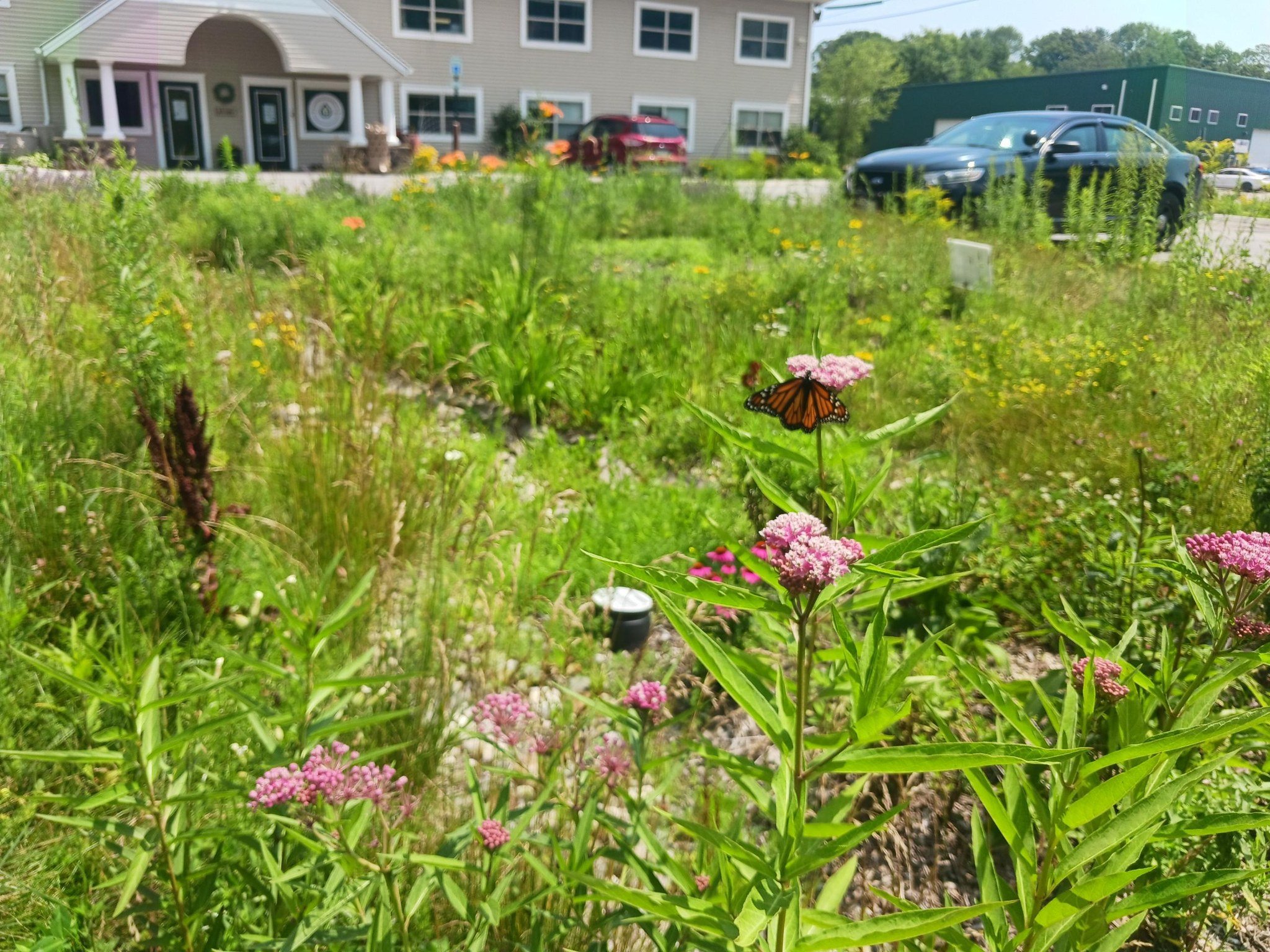
A monarch butterfly pausing for rest & a snack in our rain garden!
The District was awarded a grant from the National Association of Conservation Districts in 2024 to create eight demonstration gardens highlighting different conservation landscaping practices in the District office parking lot area. During 2025, our staff provided free workshops for residents, businesses, and municipalities focused on building healthy soils, managing stormwater, creating wildlife habitat, preventing erosion, increasing food production, and many other conservation practices that can be applied to yards, commercial spaces, and public lands. Each workshop focused on one or two of the demonstration gardens so attendees could learn more about the conservation practices before going outside to meet the plants and practice using tools, installation methods, and maintenance methods.
The NACD grant funds helped the District purchase and grow over 50 species of native plants, acquire gardening tools and equipment for workshop attendees and staff to use; set up each demonstration site, and develop workshops, factsheets, and other educational resources to incorporate into the District’s YardScaping program. This project continued strengthening and creating new community relationships with municipalities from three counties as a valuable training and educational resource in additional our YardScaping nonprofit and local business partners. The general feedback from District visitors and project attendees was very positive, with many returning for workshops on the other demonstration gardens.
What’s Next?
We will utilize what we made during the grant project to continue providing seasonal demonstration garden workshops, District garden workdays, technical assistance site visits, garden center partnerships, and other YardScaping educational resources. District staff will start sowing seeds in early 2026 to plant into sheet mulched areas, raised beds, and areas being managed for invasive plants. Once the snow melts, we’re excited to continue adding to our gardens to showcase more conservation landscaping techniques and variations that our community members can utilize on their own properties and support through larger community initiatives.
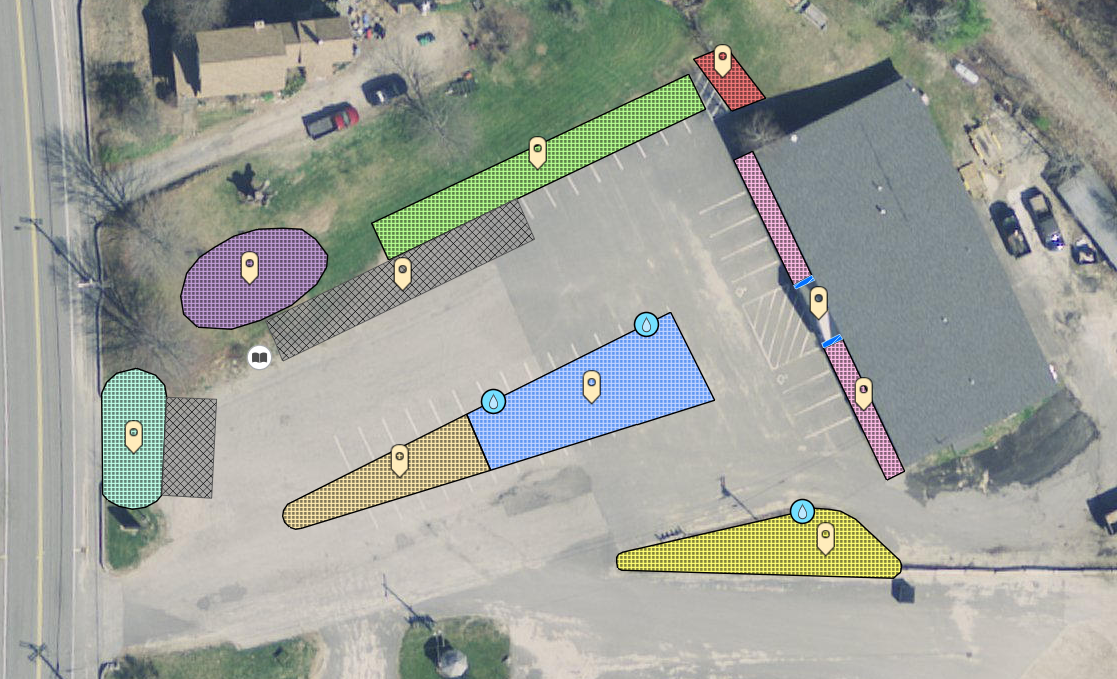
A map of the District’s conservation gardens.
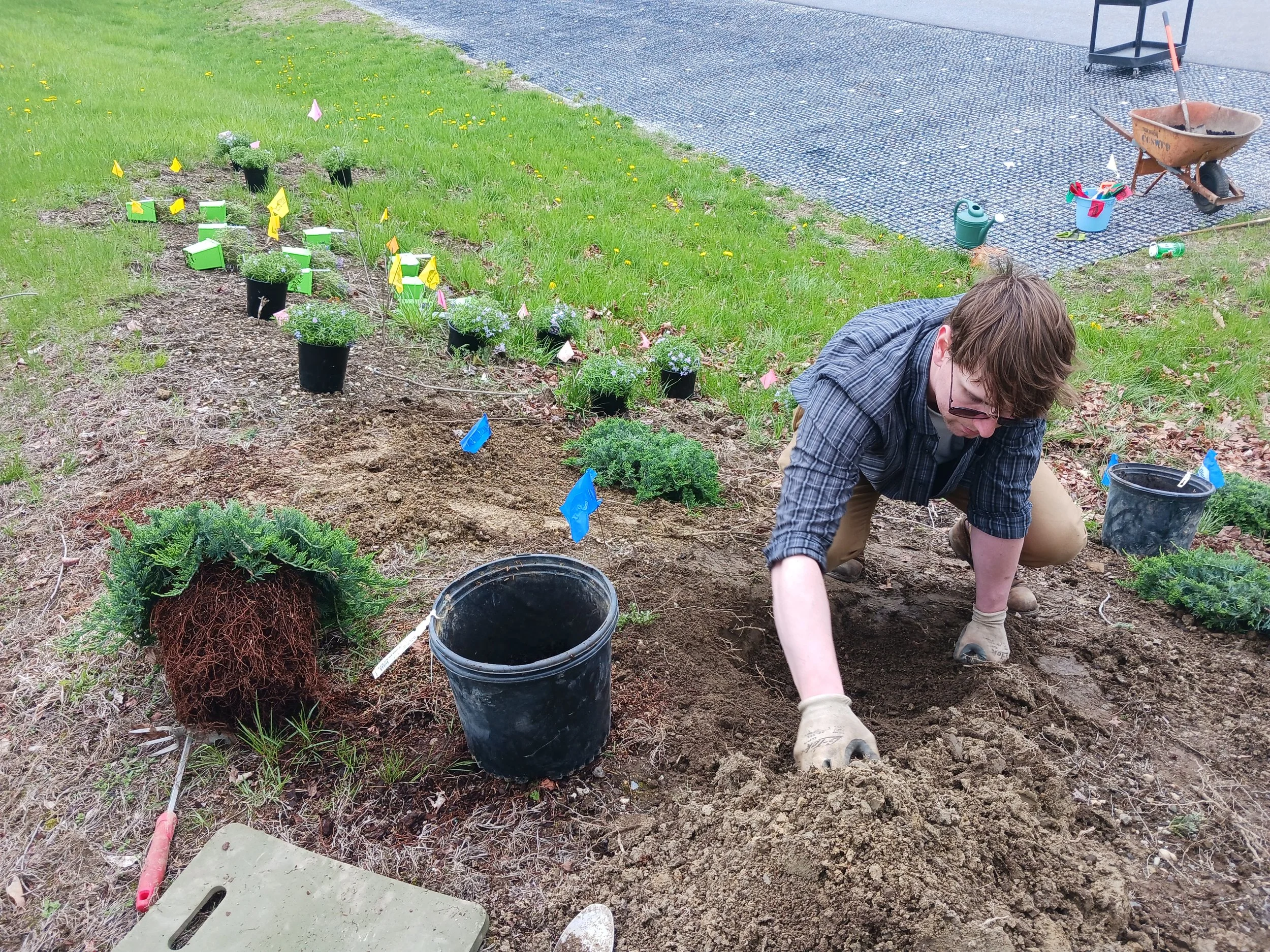
District Technician, Amren Frechette, planting groundcovers.
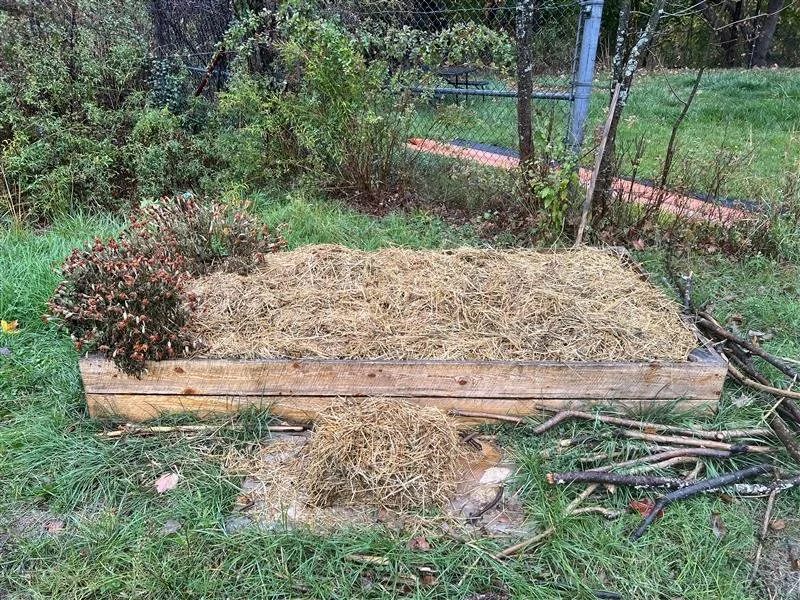
Our winterized raised bed!
Demonstration gardens included:
Bioswales - A bioswale is a shallow channel with tall and dense grasses and perennial flowers. They are often located next to roadways and parking lots. They slow down stormwater runoff to help filter out pollutants and allow water to soak into the ground.
Cover Crops - Cover crops are planted to improve soil conditions between crop plantings and to prevent soil erosion. Cover crops should be composted into the soil to increase soil organic matter, nutrients, moisture capacity, reduce compaction, and help suppress some pests and weeds.
Groundcover Plants - A groundcover is a low-growing plant with dense foliage, typically spreading wider than they are tall. They provide topsoil with a layer of protection which helps prevent erosion, controls weeds, and reduces maintenance activities like mowing and watering.
Pollinator Gardens - A pollinator garden is planted with native flowering perennials and shrubs that support wildlife by providing food, water, and shelter that mimics their natural habitat. To attract as many pollinators as possible, plants are selected to offer flowers of all shapes, sizes, and colors from early spring through late fall.
Rain Gardens - A rain garden is a shallow depression that is filled with moisture-tolerant plants to collect, treat, and absorb stormwater. They help prevent localized flooding and erosion, intercept pollutants, and provide habitat for wildlife.
Raised Beds - A raised bed garden increases gardening accessibility and food production. They can be used to customize soils to desired crops, improve crop drainage, reduce weeds, and extend the growing season.
Salt-Tolerant Gardens - A salt-tolerant garden uses plants that tolerate salt spray and soils with high salt content such as coastal regions and along roads, parking lots, and sidewalks. Many salt-tolerant plants are also drought-resistant, tolerant of poor soil quality, and assist in shoreline stabilization.
Vertical Gardens - A vertical garden can be plants that naturally grow very tall or vines supported by a vertical structure, such as a trellis or a lattice. This is an ideal garden type for those focused on space-saving options or looking to transform unused vertical space. They can also help insulate buildings, reduce noise pollution, provide passive cooling, and increase food production.